

 English



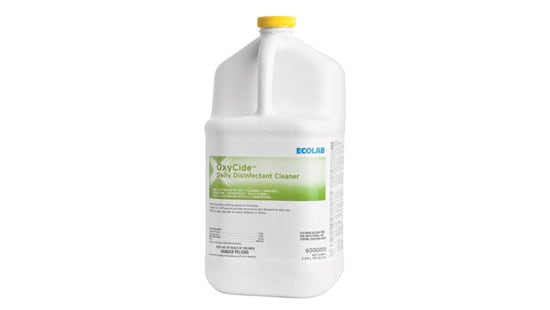
OxyCide™ Daily Disinfectant Cleaner: Proven Performance and Clinical Outcomes
OxyCide™ Daily Disinfectant Cleaner delivers sporicidal efficacy and has been designed for daily use. It is an EPA-registered, dilutable concentrate that is effective against Clostridioides difficile (C. diff) spores, Candida auris, and a broad spectrum of other organisms. This one-step disinfectant cleaner and deodorizer is engineered for hard and flexible non-porous inanimate surfaces, ensuring that your facility remains protected without the need for multiple cleaning products.
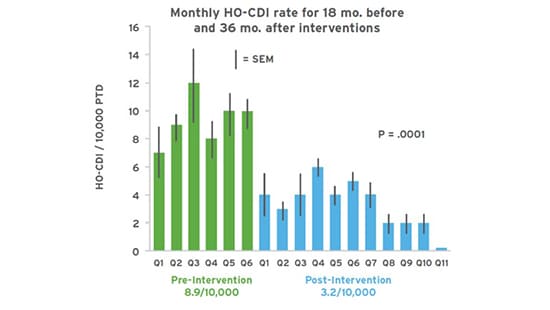
Proven 50% Reduction in Hospital-Onset C. diff
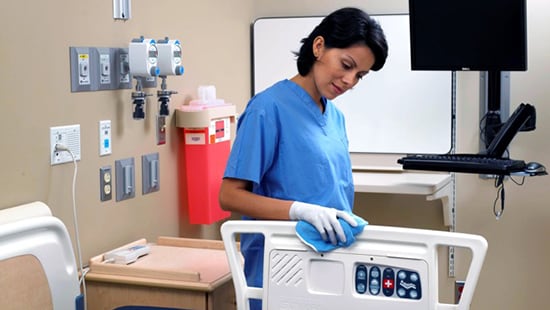
The effectiveness of the OxyCide cleaner is demonstrated through a multi-center, quasi-experimental involving eight acute-care hospitals. The study evaluated the impact of a standardized patient room cleaning program centered on daily sporicidal disinfection with OxyCide.
The results were statistically significant and sustained:


Broad Material Compatibility for Hospital Assets
OxyCide helps extend the life of your equipment by providing broad material compatibility across these essential hospital surfaces.
- Metals: 304 SS, 316 SS, Nickel, and Chrome.
- Plastics: ABS, HDPE, LDPE, PET, Polycarbonate, Acrylic, Polypropylene, Polysulfone, Polystyrene, and PVC.
- Floor/Fixtures: Floor Finish, Granite, Epoxy Grout, Glazed Ceramic, Glazed Porcelain, Porcelain Enamel, Glass, Formica, Melamine, Laminate, and Painted Surfaces.
- Fabric/Upholstery: Polyester, Nylon, Cotton, Microfiber, Vinyl, and Polyurethane.
- Elastomers: Nitrile, Polyethylene, Viton, Silicone, and EPDM.
Features and Benefits: The OxyCide Advantage

Proactive Daily Defense
- EPA-Registered Efficacy: A one-step disinfectant cleaner, virucide, and deodorizer with sporicidal activity that delivers a complete kill in 5 minutes or less.
- Targeted Kill Claims: Effectively kills Candida auris in 3 minutes and Clostridioides difficile endospores in 5 minutes.
- Broad Spectrum: Effective against 32 other organisms on hard and flexible non-porous inanimate surfaces.
- Proactive Use: Provides daily defense against C. diff and Candida auris, addressing spores that routine disinfectants may miss.
Operational Efficiency and Productivity
- Product Standardization: Enables simplification by requiring only one product for daily cleaning, discharges, and isolation.
- Reduced Complexity: Minimizes the need for training on multiple products, streamlining Environmental Services (EVS) workflows.
- One-Step Process: A no-rinse process that eliminates the need for separate glass, stainless steel, and specialized cleaners.
- No Binding Issues: Formulated without quat-based chemistries, ensuring there are no issues with cloth absorption or binding.
Protecting Assets and Staff
- Superior Compatibility: Favorable material compatibility helps minimize damage to surfaces and helps reduce the risk and cost of replacing damaged goods.
- Non-Corrosive: Does not corrode surfaces, damage mattresses, or damage soft goods and fabrics.
- No Visible Residue: Dries without leaving behind any visible residue, residual salts, or films on surfaces.
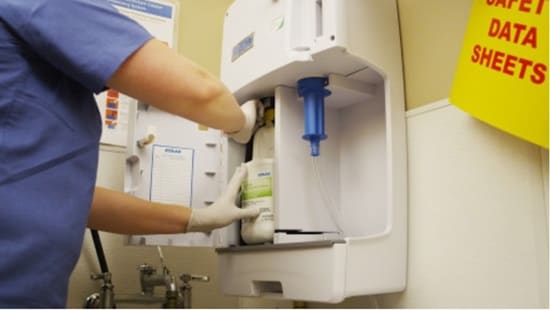
- Enhanced Safety: A closed-loop package and dispensing system with a single dilution rate (3 oz/gal). As applied according to label instructions, the diluted product requires no Personal Protective Equipment (PPE).

Long-Term Infection Control
- Infection Reduction: Daily use as part of a standardized program resulted in a 50% reduction in hospital-onset C. diff infections across acute-care hospitals.1
- High Effectiveness: Cleaning thoroughness improved steadily and reached over 93% effectiveness, supporting long-term control rather than short-term gains.1
- Repeatable Practices: Enables standardized, repeatable cleaning practices across units and shifts when paired with training and monitoring.
- Real-World Evidence: Performance is backed by peer-reviewed evidence from real hospital environments, ensuring results are sustainable over time.
Customer Success
“OxyCide™ enabled standardization of cleaning procedures across all units and departments, making cleaning and disinfecting simple and straightforward.”
– C. Chagai, Director of Hospitality Services in Clinton, IA (2019)
In a study that compared bleach to OxyCide™:
“EVS staff stated that patients preferred the smell of the current room cleaner (OxyCide™) compared to bleach used previously.”
– Infection Control & Hospital Epidemiology (2019), 40, 880-888
FAQs
A correctly dispensed OxyCide solution will exhibit three distinct signs:
- It is cloudy.
- It is fizzy.
- It smells like vinegar.
If the solution lacks any of these three signs, do not use it, and notify your supervisor immediately.

What is Candida auris?
Candida auris is an emerging, multi-drug resistant fungus and a serious global health threat. It spreads through patients and contaminated surfaces, putting hospital systems at risk for outbreaks.

What is Clostridium difficile?
This antibiotic-resistant bacteria forms spores that allow it to survive in the environment for long periods. It is the most frequent cause of hospital-acquired diarrheal infections and serious intestinal conditions.

1/2 Million Illnesses Each Year Caused by C. difficile
The CDC estimates that C. difficile causes nearly half a million illnesses and 29,300 deaths annually in the U.S. About one quarter of these illnesses occur specifically in hospital settings.
OxyCide™ Safety Data
When diluted according to label instructions, personal protective equipment (PPE) is not required.
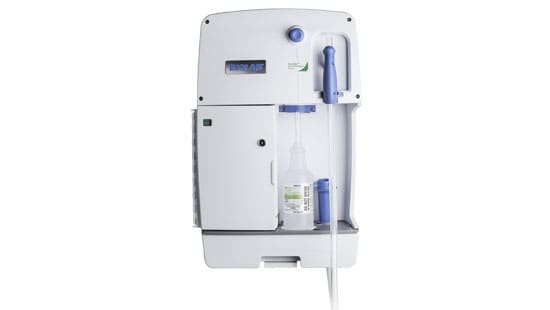
OxyCide™ Dilution Management System

Preventing HAIs: Guide to Pathogen Lifespans & Disinfection Protocols
Discover how long pathogens like MRSA and C. diff survive on hospital surfaces and learn how OxyCide Daily Disinfectant Cleaner helps reduce HAIs.